Mastering the Editable Text Effect for Design
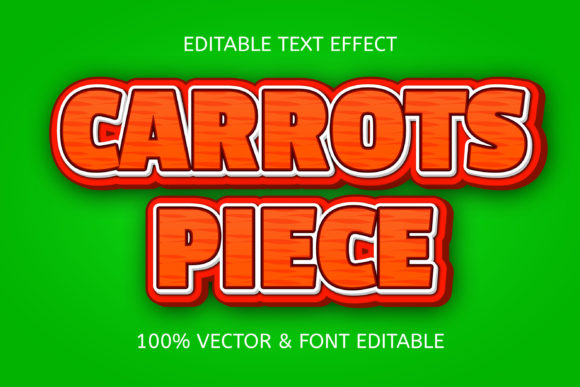
In the fast-paced world of digital design, the ability to adapt quickly is often more valuable than raw technical skill. This is where the Editable Text Effect becomes an indispensable tool. Whether you are crafting a social media story, designing a mobile app interface, or printing a high-end flyer, having access to text layers that remain fully customizable saves hours of work. Unlike static images where typography is flattened and immutable, an editable effect allows you to change the wording, font, and spacing without losing the intricate styling, shadows, or 3D depth applied to the original design.
The true power of these assets lies in their versatility. A single file can serve as the foundation for a website header, a smartphone wallpaper, or a marketing brochure. When these graphics are delivered as 100% vector files, they offer infinite scalability. You can shrink them down for a mobile icon or blow them up for a billboard without ever seeing a pixelated edge. Furthermore, when these vectors are paired with high-resolution raster previews at 300 DPI, they bridge the gap between screen and print, ensuring your project looks crisp regardless of the medium.
Why Different Creators Value Flexibility
Not every user approaches design with the same goals or constraints. Understanding how different groups utilize editable text effects can help you decide if this resource fits your current workflow.
For beginners and hobbyists, the primary appeal is often ease of use and immediate results. Learning complex software like Adobe Illustrator or Photoshop to create a realistic 3D text effect from scratch can take months of practice. An editable template bypasses this steep learning curve. A hobbyist creating a birthday invitation or a personal blog header can simply open the file, type their message, and export a professional-looking result. The priority here is speed and accessibility. They value the well-organized shapes and colors because it means they don't have to guess which layer controls the shadow and which controls the highlight.
Freelancers and small business owners, on the other hand, view these tools through the lens of efficiency and commercial value. Time is money. If a freelancer can deliver a client's logo variation or a promotional flyer in half the time by utilizing a high-quality base template, their profit margin increases. For a small business owner managing their own marketing, the ability to update a "Summer Sale" graphic to a "Winter Clearance" graphic instantly—without hiring a designer—is crucial. Their focus is on reliability and consistency. They need to know that the EPS file will open correctly in their software and that the colors will remain vibrant across different outputs.
Professional designers and agencies might use editable text effects differently. Rather than using them as a final product, they often treat them as a starting point or a time-saver for specific elements within a larger composition. A senior designer might use a 3D text effect as a base, then modify the lighting, texture, or geometry to create something entirely unique that matches a specific brand identity. For this group, the quality of the vector paths and the organization of the layers are paramount. A messy file with ungrouped elements is useless to a pro who needs to deconstruct and rebuild the effect.
The Technical Advantage of Vector and High Resolution
When evaluating design assets, the format matters immensely. The combination of EPS (Encapsulated PostScript) and high-resolution JPG files offers a comprehensive solution for modern projects.
- Vector Scalability: Because the core graphics are 100% vector, they are defined by mathematical equations rather than pixels. This means you can scale the text effect up or down infinitely. If you are designing for a mobile app today but plan to use the same asset for a trade show banner next year, vector files ensure you never need to recreate the work.
- Print Readiness: The inclusion of 300 DPI JPGs ensures that what you see on your screen is a faithful representation of how the image will look in print. While vectors are ideal for printing, having a high-res raster version is helpful for quick previews, web usage where vector support is limited, or sharing proofs with clients who may not have design software.
- Color and Shape Organization: Well-organized files separate shapes, gradients, and text layers logically. This structure is vital for anyone who needs to tweak the color palette to match brand guidelines. Instead of hunting through dozens of unnamed layers, a structured file allows for rapid customization.
Practical Applications Across Industries
The utility of an editable text effect extends far beyond simple decoration. Here is how various sectors can leverage these assets:
Digital Marketing and Social Media
Marketers and bloggers constantly need fresh visuals to maintain engagement. An editable 3D text effect can be used to create eye-catching thumbnails for YouTube videos, Instagram story highlights, or Facebook ad headers. The ability to swap out text quickly allows for A/B testing different headlines without redesigning the entire graphic.
Web and App Development
For web designers and app developers, these effects add depth and personality to user interfaces. A 3D editable title can serve as a hero section on a landing page, drawing the user's eye immediately. Since the files are vector-based, they load quickly and render sharply on retina displays and high-DPI mobile screens.
Education and Publishing
Educators and publishers can use these tools to create engaging worksheets, presentation slides, or book covers. A teacher might use a fun, colorful text effect to highlight key vocabulary words, while a self-publisher could use a sophisticated 3D style for a thriller novel cover. The emphasis here is on visual communication—making the content more appealing and easier to digest.
Making the Right Choice for Your Project
Deciding whether to use a pre-made editable text effect depends on your specific needs. Ask yourself the following questions:
- What is my timeline? If you need a polished result immediately, a template is superior to building from scratch.
- Where will this be used? If the project involves both digital and print mediums, ensure the asset provides both vector (EPS) and high-res raster (JPG) formats.
- How much customization do I need? If you only need to change the words and colors, a well-organized template is perfect. If you need to alter the fundamental geometry of the letters, ensure the vector paths are accessible and editable.
- What is my skill level? Beginners should look for files described as "well organized" with clear layer names, while advanced users might prioritize complex gradient meshes or lighting effects.
Ultimately, the Editable Text Effect is about empowering creators. It removes technical barriers, allowing you to focus on the message rather than the mechanics of design. Whether you are a student working on a thesis presentation, an entrepreneur launching a new product, or a seasoned artist looking for inspiration, these flexible, high-quality assets provide a solid foundation for creativity. By choosing resources that offer both vector precision and high-resolution reliability, you ensure your work stands out in any environment, from the smallest smartphone screen to the largest printed poster.