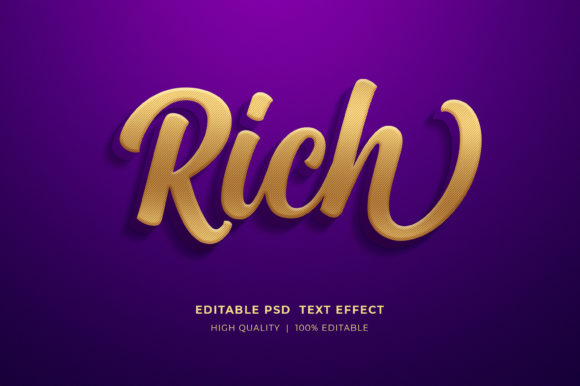
Mastering Visual Impact with a Rich Editable Text Effect Mockup
In the rapidly evolving landscape of digital design, the ability to communicate a message instantly through typography is paramount. Whether you are a seasoned graphic designer, a marketing professional, or a small business owner managing your own brand assets, the visual weight of your text can determine the success of a campaign. This is where leveraging a Rich Editable Text Effect Mockup becomes an invaluable asset in your creative workflow. These tools bridge the gap between complex 3D rendering software and accessible, high-quality design output, allowing creators to produce stunning visuals without needing hours of manual labor.
The modern creator often faces the challenge of maintaining consistency while producing a high volume of content. From social media banners to physical merchandise, the demand for polished, professional-looking text effects is relentless. By utilizing pre-built mockups that feature editable 3D text style effects, designers can focus more on the conceptual aspect of their projects rather than getting bogged down in the technical intricacies of lighting, shading, and texture mapping. This approach not only saves time but ensures a level of polish that might otherwise require advanced expertise in specialized 3D modeling programs.
The Mechanics of Smart Object Integration
At the heart of these powerful design resources lies the functionality of Adobe Photoshop's Smart Objects. Understanding how to manipulate these elements is key to unlocking the full potential of an Editable 3D Text Style Effect Mockup. Unlike standard raster layers, Smart Objects preserve an image's source content with all its original characteristics, enabling non-destructive editing. When you download a high-quality mockup package, you are essentially receiving a sophisticated container where the heavy lifting of lighting and texture has already been calculated and baked into the file structure.
The process of customization is remarkably intuitive, designed to accommodate users of varying skill levels. To change the text, logos, or icons within the composition, the user simply needs to locate the specific Smart Object layer, often labeled clearly for ease of use. Upon double-clicking the smart object icon, a new tab opens within the software interface. Here, the designer selects the type tool, clicks on the existing placeholder text, and inputs their desired wording. Once saved, the main document automatically updates, wrapping the new text in the complex 3D effect, complete with realistic shadows, highlights, and environmental reflections. This seamless workflow allows for rapid iteration, meaning you can test dozens of headlines or logo variations in the time it would take to render a single frame in a traditional 3D environment.
Expanding Creative Horizons Across Industries
The versatility of these mockup files extends far beyond simple digital graphics. Because the output is typically high-resolution and organized in RGB color space, the applications are vast and varied. For marketing professionals, these tools are essential for creating eye-catching Facebook timelines, website headers, and web banners that stop the scroll. The depth provided by a 3D text effect adds a layer of sophistication that flat design often lacks, making the call-to-action buttons or promotional headlines pop against the background.
In the realm of print and physical products, the utility of a Rich Editable Text Effect Mockup is equally significant. Designers working on T-Shirt designs or Print-on-Demand (POD) projects can visualize how a textured, dimensional logo will look on fabric before ever sending a file to production. Similarly, authors and publishers utilizing Kindle Direct Publishing (KDP) can craft compelling Book Cover Designs that stand out in thumbnail views on online marketplaces. The ability to preview these effects in a realistic setting helps in making informed decisions about color contrast and legibility, ensuring the final product resonates with the target audience.
Educators and researchers presenting data or creating educational materials can also benefit from these assets. By turning dry titles into engaging 3D elements, presentations become more memorable. Furthermore, event organizers can quickly generate posters, flyers, and banners for upcoming events, maintaining a cohesive brand identity across all marketing collateral. The flexibility to edit not just the text but also the colors and elements means that a single mockup file can serve multiple campaigns throughout the year, adapting to different seasonal themes or promotional needs.
Technical Specifications and File Organization
When selecting a resource for your projects, understanding the technical underpinnings is crucial for a smooth experience. High-quality mockups are delivered as PSD files, the native format of Adobe Photoshop. This ensures compatibility and access to the full range of editing features. A hallmark of a well-constructed mockup is its organization. Files should be well-organized with easy-to-layer structures, where groups are named logically (e.g., "Background," "Text Effect," "Shadows," "Overlays"). This transparency allows advanced users to dive deeper if necessary, tweaking specific adjustment layers to fine-tune the brightness, contrast, or hue of the final image.
The resolution of these files is another critical factor. Professional-grade mockups are provided in high resolution, often exceeding standard screen dimensions to accommodate large-format printing. Whether you are designing a billboard or a business card, starting with a high-resolution base ensures that the edges of your 3D text remain crisp and free of pixelation. Additionally, the color mode is typically set to RGB, which is ideal for digital displays, though many files can be converted to CMYK for specific print requirements without losing the integrity of the smart object links.
Accessibility is also a key consideration. These design assets are usually distributed in a compressed zipped format to facilitate faster downloads and efficient storage. To get started, users simply need to extract the files. On most operating systems, this involves right-clicking the zip folder and selecting "Extract Here" or using a dedicated decompression utility. Once extracted, the folder reveals the PSD working file along with any supplementary documentation or preview images. This straightforward extraction process ensures that even those less familiar with file management can begin their design work immediately.
Optimizing Workflow for Logo Presentations and Branding
For branding agencies and freelance designers, the presentation phase is just as important as the creation phase. A Logo presentation utilizing a rich 3D text effect can elevate a client's perception of the value of the work. Instead of showing a flat vector file, presenting the logo embedded in a realistic environment with depth and texture helps the client visualize the brand in the real world. This psychological impact can be the difference between a rejected concept and an approved project.
Using an Editable 3D Text Style Effect Mockup allows for the creation of comprehensive brand guidelines and marketing kits. You can generate a series of images showing the logo in various contexts—on a storefront sign, on a mobile app icon, or embossed on stationery—all derived from the same core asset. This consistency reinforces brand recognition. Moreover, because the text and elements are fully editable, you can easily create variations for different departments or sub-brands without starting from scratch. The efficiency gained here translates directly into billable hours saved or the ability to take on more clients.
Considerations for Effective Implementation
While these tools offer immense power, effective implementation requires a keen eye for design principles. Just because you can apply a heavy 3D effect doesn't mean you always should. The context of the project must dictate the style. For instance, a minimalist tech startup might benefit from a subtle, sleek metallic finish, whereas a children's entertainment brand might require bold, colorful, and playful typography. The Rich Editable Text Effect Mockup provides the canvas, but the designer must provide the vision.
It is also important to consider the legibility of the text. Complex textures and dramatic lighting can sometimes obscure the characters, especially at smaller sizes or on lower-resolution screens. When customizing the text, always review the final output at 100% zoom to ensure clarity. If the effect overwhelms the message, consider adjusting the opacity of the texture layers or simplifying the background elements within the PSD file. The advantage of having a well-organized, layered file is that these adjustments are non-destructive and easily reversible.
Furthermore, staying updated with design trends is essential. While 3D text has seen a resurgence, the specific styles—whether it's glassmorphism, retro chrome, or soft clay morphism—change frequently. A versatile mockup pack allows you to adapt to these trends by simply changing colors and textures. This adaptability ensures that your marketing materials, whether for a website element or a print template, remain contemporary and relevant.
Support and Community Engagement
Navigating new design tools can occasionally present challenges, regardless of one's experience level. Whether it is a question about extracting files, a query regarding layer compatibility, or a request for a specific customization, access to support is vital. Many creators of these high-quality resources maintain open lines of communication through their profile pages. If you encounter difficulties or need clarification on how to achieve a specific look, reaching out to the designer can provide quick solutions and enhance your learning experience.
The ecosystem of digital assets thrives on feedback and community engagement. When a resource proves helpful and elevates your project quality, sharing that success is beneficial for the entire creative community. Rating a product highly serves as a testament to its utility and encourages the creator to continue developing innovative tools. It creates a positive feedback loop where designers are inspired to make more diverse and advanced designs, ultimately raising the standard of available resources for everyone. This cycle of creation, usage, and feedback drives the industry forward, ensuring that tools like the Rich Editable Text Effect Mockup continue to evolve to meet the growing demands of the digital age.
In conclusion, integrating editable 3D text mockups into your design repertoire is a strategic move towards greater efficiency and higher quality output. By mastering the simple mechanics of smart objects and understanding the broad spectrum of applications—from POD merchandise to corporate branding—you unlock a world of creative possibilities. The combination of technical ease and visual impact makes these tools indispensable for anyone looking to make a lasting impression in a crowded visual marketplace.