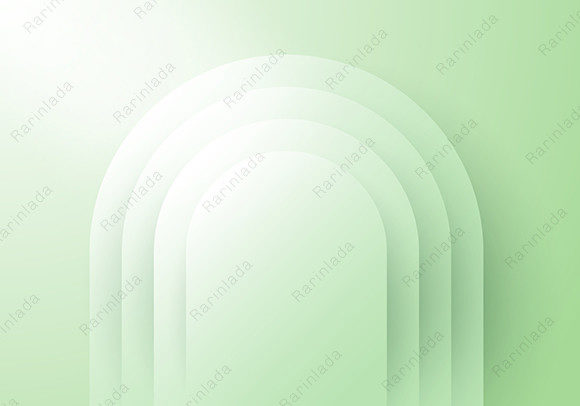
Elevating Visual Design with 3D Green Rounded Layered Paper Backdrops
In the evolving landscape of digital design and print media, the demand for assets that combine aesthetic appeal with technical flexibility has never been higher. Among the most versatile tools available to modern creators is the 3D Green Rounded Layered Paper Backdrop. This specific style of visual asset merges the tactile warmth of traditional paper crafting with the precision of vector geometry, resulting in a minimal wall scene that feels both organic and meticulously constructed. Whether used for corporate branding, educational materials, or creative hobby projects, understanding the nuances of this design element can significantly enhance the quality and impact of visual communication.
The Anatomy of Geometric Precision and Organic Form
At its core, this design style relies on the interplay between rigid geometric shapes and soft, rounded contours. The term "geometric rounded layered paper cut style" describes a technique where flat planes of color are stacked to create an illusion of depth without relying on complex raster shadows or gradients. Instead, depth is achieved through the strategic offsetting of layers, mimicking the physical act of cutting and stacking sheets of colored paper.
The choice of green as the primary palette is particularly significant. Green evokes feelings of growth, harmony, and freshness, making it an ideal choice for backgrounds that need to feel inviting yet professional. When these green hues are applied to rounded shapes, the harshness often associated with strict geometry is softened. The result is a minimal wall scene that provides a clean canvas for foreground content while maintaining visual interest through subtle layering.
Unlike raster images, which are composed of pixels and can lose quality when scaled, these backdrops are crafted as 100% vector illustrations. This means every curve, edge, and layer is defined by mathematical paths. This fundamental characteristic ensures that the artwork remains crisp and clear regardless of the output size, from a small mobile icon to a massive billboard.
Technical Superiority: Resolution and Editability
One of the most critical considerations for professionals selecting background assets is file fidelity. A standard requirement for high-quality print production is a resolution of 300 DPI (dots per inch). While vector files theoretically have infinite resolution, the accompanying raster previews or exported JPGs included in these packages must meet this standard to ensure compatibility with various workflows. High-resolution files prevent pixelation and jagged edges, which can undermine the perceived quality of a final product.
Furthermore, the utility of a 3D Green Rounded Layered Paper Backdrop is vastly expanded by its editability. Because the file is fully editable and free of watermarks, designers retain complete control over the composition. Using vector-based graphic programs such as Adobe Illustrator or Corel Draw, a user can isolate individual layers, adjust the shade of green to match specific brand guidelines, or rearrange the geometric elements to better suit a particular layout.
The inclusion of multiple file formats, specifically EPS Version 10 and JPG, caters to a wide range of technical environments. EPS Version 10 is a legacy-compatible format that ensures the vector data can be opened and manipulated in older versions of design software, providing longevity and accessibility for users who may not have the latest updates. The JPG counterpart offers a ready-to-use raster option for quick integration into word processors, presentation software, or web platforms where vector editing is not required.
Diverse Applications Across Industries
The versatility of this backdrop style allows it to serve a broad spectrum of users, from business owners to educators. Its application is not limited to a single medium but extends across various domains where visual clarity and aesthetic consistency are paramount.
- Corporate Branding and Marketing: Businesses often require backgrounds for brochures, annual reports, and social media campaigns that convey stability and innovation. The clean lines and professional green tones of a layered paper backdrop provide a sophisticated look that does not distract from the core message. It serves as an excellent foundation for infographics, allowing data points to pop against the structured background.
- Educational Materials: Educators and researchers creating presentations or handouts benefit from the organized nature of geometric designs. The layered effect can subtly guide the viewer's eye through a hierarchy of information. For instance, different layers can represent different stages of a process or levels of a concept, reinforcing the content through visual metaphor.
- Web and UI Design: In the realm of user interface design, minimalism is key. A vector-based green backdrop can be used as a hero section background or a pattern for app interfaces. Because it is scalable, it adapts seamlessly to different screen densities, ensuring a sharp appearance on both standard monitors and high-DPI retina displays.
- Packaging and Print: For product packaging, especially in the eco-friendly or wellness sectors, the paper-cut aesthetic aligns perfectly with the brand identity. The texture implied by the layers suggests craftsmanship and attention to detail, adding perceived value to the physical product.
Workflow Integration for Creators and Hobbyists
Integrating a 3D green geometric rounded layered paper cut style backdrop into a creative workflow is straightforward, yet it opens up numerous possibilities for customization. For a hobbyist creating invitations or scrapbook pages digitally, the process begins by importing the EPS file into their preferred software. Once imported, the grouped elements can be ungrouped, allowing the creator to recolor specific layers to match a wedding theme or a birthday party palette.
For professional graphic designers, the workflow often involves using the backdrop as a base for more complex compositions. The minimal wall scene acts as a stage. Designers might overlay typography, product photography, or iconography. The key advantage here is the non-destructive nature of vector editing. If a client requests a change in the background intensity or a shift in the geometric arrangement, the designer can make these adjustments instantly without needing to recreate the image from scratch or worry about losing image quality.
Moreover, the absence of watermarks in the provided files streamlines the production process. There is no need for time-consuming retouching to remove unwanted overlays, ensuring that the final output is clean and ready for distribution immediately after design finalization.
Strategic Considerations for Selection
While the benefits of using vector backdrops are clear, selecting the right asset requires a degree of discernment. Not all "3D" effects are created equal. A high-quality 3D Green Rounded Layered Paper Backdrop should demonstrate a logical light source and consistent shadowing between layers to maintain the illusion of depth. The rounding of the corners should be uniform and mathematically precise, avoiding irregularities that can make the design appear amateurish.
Color theory also plays a vital role. The specific shade of green chosen should align with the psychological impact desired. Lighter greens often suggest freshness and new beginnings, suitable for spring campaigns or health-related topics. Darker, forest greens convey luxury, wealth, and established trust, making them appropriate for financial institutions or high-end retail. The layered approach allows for a gradient effect using solid colors, providing depth without the muddiness that can sometimes occur with transparent gradients in print.
Additionally, compatibility is a crucial factor. Ensuring that the file format (EPS Version 10) is compatible with the user's current software suite prevents workflow interruptions. While modern software handles newer formats well, the adherence to Version 10 standards guarantees that the file remains accessible across a decade of software iterations, protecting the user's investment in the asset.
The Future of Minimalist Vector Aesthetics
As digital screens become higher in resolution and print technologies more advanced, the reliance on vector graphics is poised to grow. The 3D green geometric rounded layered paper cut style represents a convergence of nostalgia for tangible crafts and the efficiency of digital tools. It satisfies the modern consumer's desire for authenticity and tactile visuals while meeting the technical demands of multi-platform distribution.
For researchers analyzing design trends, this style exemplifies the shift towards "flat 2.0" or "semi-flat" design, where dimensionality is suggested rather than fully rendered with photorealistic textures. This approach reduces visual clutter and cognitive load for the viewer, facilitating better information retention. For business owners, adopting such clean and professional aesthetics can elevate brand perception, signaling a commitment to quality and modernity.
Ultimately, the value of these assets lies in their adaptability. They are not static images but dynamic foundations upon which endless variations can be built. Whether utilized in a high-stakes corporate pitch deck, a classroom lesson plan, or a personal creative project, the 3D Green Rounded Layered Paper Backdrop offers a robust, high-resolution, and aesthetically pleasing solution that bridges the gap between artistic expression and functional design.
By leveraging the full potential of 100% vector files, ensuring 300 DPI output standards, and utilizing the inherent flexibility of layered geometric forms, creators can produce work that stands out in a crowded visual landscape. The combination of technical precision and artistic simplicity makes this style a timeless choice for anyone looking to enhance their visual storytelling capabilities.