Vibrant Abstract 3D Backgrounds for Bold Branding
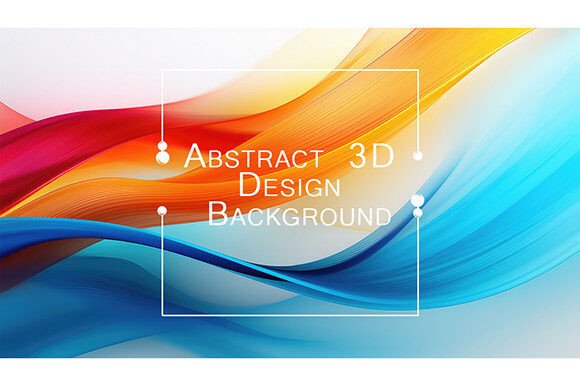
In the crowded digital landscape, static imagery often fails to capture attention. Audiences scroll past flat colors and generic stock photos without a second thought. This is where a high-resolution Abstract 3D Design Background becomes an essential asset for modern creatives. Specifically, the iteration featuring bright red, orange, and blue ribbons offers a dynamic visual language that speaks to energy, movement, and innovation. At 3675x2100 pixels with a robust 300 DPI resolution, this isn't just a wallpaper; it is a foundational element for building a cohesive and striking brand identity.
The visual personality of this design lies in its fluidity. Unlike rigid geometric patterns or repetitive textures, the ribbon-like structures create a sense of organic flow. The interplay of warm tones—fiery reds and vibrant oranges—against the cool, stabilizing depth of electric blue creates a natural contrast that guides the eye across the canvas. This isn't accidental; it's a deliberate use of color theory to evoke excitement while maintaining professional balance. For designers and marketers, this means you have a backdrop that adds depth without overwhelming the foreground content, whether that's a bold headline, a product shot, or a call-to-action button.
Elevating Visual Hierarchy Across Print and Digital Media
One of the most common challenges in editorial design and packaging design is establishing a clear visual hierarchy. You need the audience to know exactly where to look first. A complex or noisy background can ruin readability, but a well-structured abstract 3D composition does the opposite. The smooth gradients and soft shadows inherent in this 300 DPI JPEG file provide subtle cues that push text forward. When you overlay a clean sans serif font or a sophisticated serif font onto these undulating ribbons, the text pops naturally.
Consider the application in web design and landing pages. While web graphics often rely on 72 DPI, starting with a 300 DPI source file ensures that your assets look crisp on high-density Retina displays and 4K monitors. You can crop specific sections of the 3675x2100 image to create hero banners, sidebar graphics, or footer accents without losing quality. The resolution allows for significant flexibility; you aren't locked into a single layout. For social media graphics, this means you can adapt the same core asset for an Instagram story, a LinkedIn banner, and a Facebook cover, maintaining brand consistency across platforms without the image looking pixelated or stretched.
In the realm of print, the difference between a standard web image and a true 300 DPI file is night and day. If you are producing posters, postcards, or business cards, using a low-resolution image results in jagged edges and muddy colors when ink hits paper. This premium quality file ensures that the transition from red to orange remains smooth and the blue retains its saturation. It gives physical materials a tactile feel, even though they are printed on flat stock. For small business owners creating invitations or event programs, this level of detail signals professionalism and care, subtly influencing how recipients perceive the value of the event or product.
Strategic Color Psychology and Brand Perception
Color is rarely just decorative; it is communicative. The specific palette used in this Abstract 3D Design Background—red, orange, and blue—triggers distinct psychological responses. Red and orange are associated with urgency, passion, creativity, and warmth. They are excellent for brands in the food, entertainment, or fitness sectors where energy is key. Blue, conversely, represents trust, stability, and intelligence. By weaving these together in a 3D ribbon format, the design bridges the gap between "exciting" and "reliable."
For a startup launching a new app, this background could serve as the primary visual motif for their logo design elements or pitch deck. It suggests a company that is dynamic (the movement of the ribbons) yet grounded (the structural integrity of the 3D forms). When used in brand identity systems, such a background helps differentiate a business from competitors who might be sticking to safe, monochromatic, or overly minimalist trends. It shows confidence. It tells the audience that the brand is not afraid of color or complexity.
Furthermore, the abstract nature of the design prevents it from dating quickly. Trend-specific illustrations or photography can feel outdated within months. However, pure form and color interactions tend to have a longer shelf life. This makes the asset a smart investment for long-term marketing campaigns. Whether you are a blogger looking to refresh your site header or a publisher designing a book cover, the timeless quality of 3D abstraction ensures your work remains relevant. It acts as a neutral yet powerful stage upon which your specific message can perform.
Practical Implementation and Technical Considerations
Integrating a high-fidelity asset like this into your workflow requires a bit of strategic planning. First, consider your font pairing. Because the background has significant movement and color variation, your typography needs to be legible. Avoid overly decorative script fonts or thin handwritten fonts that might get lost against the busy ribbon details. Instead, opt for bold, geometric typefaces or heavy weights of modern display fonts. If you must use lighter text, consider adding a subtle drop shadow or a semi-transparent overlay box to ensure readability.
When preparing files for different mediums, always start with the master 300 DPI JPEG. For digital use, downsample the image to reduce file size and improve page load speeds, but keep the original for any print jobs. If you are using this for packaging design, ensure you convert the color profile from RGB (screen) to CMYK (print) if your printer requires it, although high-quality JPEGs often hold up well depending on the printing method. Always request a proof before running a large batch to verify that the vibrant reds and blues translate accurately to the physical substrate.
Licensing is another critical factor. As a premium quality asset intended for commercial use, ensure you understand the terms of your license. Most high-end design assets allow for unlimited use in client projects, merchandise, and advertising, but it is always wise to double-check restrictions regarding resale or trademarking the image itself. You can build a brand around the look, but you generally cannot sell the raw image file as your own product.
- Web Headers: Crop the center for maximum impact on desktop views.
- Social Media: Use the corners or edges for story templates where text overlays are minimal.
- Presentation Decks: Set as a master slide background to unify your pitch.
- Merchandise: Ideal for notebook covers, tote bags, and phone cases due to the high resolution.
- Email Marketing: Use as a header image to increase open rates through visual intrigue.
Ultimately, the value of this Abstract 3D Design Background extends beyond its aesthetic appeal. It is a tool for solving design problems. It provides the depth needed to make flat designs feel immersive, the color necessary to evoke emotion, and the resolution required for professional output. In a world where visual content is consumed at lightning speed, giving your audience something rich, textured, and visually arresting is one of the best ways to ensure they stop scrolling and start engaging. Whether you are a seasoned art director or a hobbyist crafting invitations for a family event, leveraging high-quality 3D assets elevates the perceived value of your work instantly.