Evaluating the Bike 3D Text Effect for Modern Graphic Design Projects
In the rapidly evolving landscape of digital graphic design, the demand for high-impact visual assets continues to grow. Designers, marketers, and content creators are constantly searching for resources that balance aesthetic appeal with workflow efficiency. Among the various specialized assets available, the Bike 3D Text Effect has emerged as a distinct option for those looking to inject kinetic energy and industrial ruggedness into their typography. This resource is not merely a font; it is a pre-styled graphical treatment designed to streamline the creation of complex three-dimensional lettering with a specific thematic focus.
For professionals aged 20 to 50 who frequently evaluate design tools, understanding the utility of such specific effects requires a look beyond the surface-level visuals. It involves assessing how these assets integrate into existing workflows, particularly within Adobe Illustrator, and determining whether the time saved justifies the adoption of a pre-made solution over custom modeling.
Defining the Aesthetic and Functional Scope
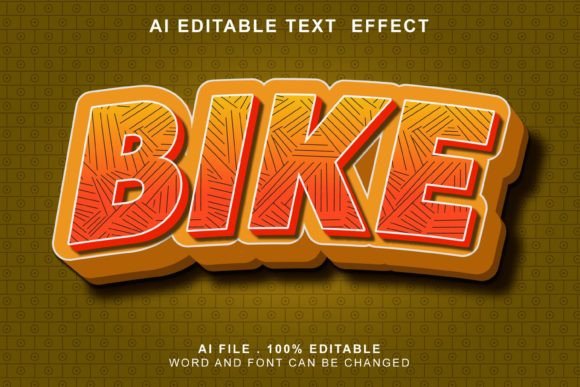
The Bike 3D Text Effect is characterized by its ability to mimic the textures, lighting, and structural depth often associated with automotive and motorcycle culture. Unlike standard 3D extrusions which can appear sterile or generic, this effect typically incorporates metallic gradients, chrome finishes, and shadowing techniques that suggest weight and durability. The "bike" element implies a certain grit and mechanical precision, making it highly suitable for projects targeting audiences interested in motorsports, adventure travel, or urban lifestyle brands.
Functionally, these assets are usually delivered as fully layered EPS files. This format is critical for professional use because it ensures scalability without loss of quality. When a designer downloads such a text effect, they are acquiring a vector-based structure where every highlight, shadow, and contour is editable. The promise of "one-click" application in Adobe Illustrator refers to the ease of swapping the placeholder text with custom copy while retaining the complex styling automatically. This eliminates the need for manual beveling, extruding, and lighting setup, which can be time-consuming even for experienced users.
Workflow Efficiency: Custom Modeling vs. Pre-Made Effects
When deciding whether to utilize a Bike 3D Text Effect template or to build a 3D type treatment from scratch, the primary trade-off is between total creative control and production speed. Building a custom 3D text effect in Illustrator or dedicated 3D software allows for unlimited customization of angles, light sources, and material properties. However, this approach demands a high level of technical proficiency and significant time investment.
In contrast, pre-made effects offer a standardized but high-quality starting point. The strength of the Bike 3D Text Effect lies in its organization. A well-organized file structure means that layers are logically named and grouped, allowing the user to isolate specific elements—such as the chrome reflection or the drop shadow—for fine-tuning. For projects with tight deadlines, such as a last-minute YouTube cover or a Facebook event banner, the ability to generate professional-grade typography in minutes is a substantial advantage.
Furthermore, these templates often utilize free fonts, which removes licensing barriers for commercial use. This is a crucial consideration for freelancers and small business owners who must manage budget constraints while delivering high-quality work. The inclusion of a JPG preview also aids in the decision-making process, allowing buyers to visualize the final output before integrating it into their specific layout.
Ideal Use Cases and Application Scenarios
The versatility of the Bike 3D Text Effect extends beyond obvious automotive themes. While it is naturally fit for motorcycle shop logos, racing event posters, or mechanic service flyers, its application is broader when viewed through the lens of texture and mood. The metallic and robust nature of the effect makes it an excellent choice for:
- Cinematic Titles: Movie titles requiring a gritty, action-oriented feel can benefit from the heavy, industrial look of bike-inspired typography.
- Gaming Assets: Website banners or stream overlays for racing games or action-adventure titles often require text that pops against dynamic backgrounds.
- Sports Marketing: Flyers for extreme sports events, marathons, or fitness challenges can leverage the energetic vibe of the 3D effect to convey movement and power.
- Product Launches: For hardware or tech products where durability is a selling point, this text style can reinforce the brand message visually.
The key to successful implementation is context. If the surrounding design elements are soft, pastel, or minimalist, a heavy chrome 3D effect might create visual dissonance. However, when paired with bold colors, grunge textures, or high-contrast photography, the Bike 3D Text Effect becomes a cohesive focal point that elevates the overall composition.
Limitations and Considerations for Buyers
Despite the clear benefits, potential users must recognize the limitations inherent in using templated effects. The most significant constraint is stylistic rigidity. While you can change the font and colors, the underlying geometric structure of the 3D extrusion and the specific lighting setup are fixed. If a project requires a unique perspective, such as an isometric view when the template is front-facing, or a specific non-metallic material like wood or glass, the template may require extensive modification that negates the time-saving benefit.
Additionally, reliance on pre-made effects can sometimes lead to a homogenized look if the same asset is used repeatedly across different campaigns without significant alteration. Designers aiming for a truly bespoke brand identity should view these tools as accelerators rather than complete solutions. They are best used as a foundation upon which custom details are added, ensuring the final product remains unique to the client's needs.
Another factor to consider is software compatibility. While EPS is a universal vector format, the specific appearance of 3D effects in Illustrator can sometimes vary slightly between different versions of the software. Users should ensure their version of Adobe Illustrator is up to date to fully utilize the layer styles and blending modes embedded in the file.
Making an Informed Decision
Ultimately, the decision to download and use a Bike 3D Text Effect depends on the specific requirements of your current project and your long-term design strategy. If you are a professional looking to expand your library of go-to assets for quick-turnaround jobs, this type of resource offers excellent value. The combination of full layering, organized structure, and ease of customization makes it a practical tool for creating posters, flyers, and digital banners efficiently.
However, if your goal is to master the fundamentals of 3D typography or if your project demands a highly unconventional aesthetic, investing time in learning native 3D tools may be more beneficial in the long run. For most practitioners, a hybrid approach works best: utilizing high-quality templates like the Bike 3D Text Effect for routine tasks while reserving custom modeling for flagship projects that define a brand's core identity.
By evaluating these factors—workflow efficiency, stylistic fit, and customization limits—designers can make informed choices that enhance their productivity without compromising on quality. Whether for a cinematic title sequence or a social media header, the right text effect serves as a powerful bridge between concept and execution, allowing creativity to flourish within the bounds of practical constraints.